
Pill testing:
it’s safer to know
what you’re in for
The trial worked. The Health Minister let it end. Here’s why we need it back.
In 2025, NSW ran a pill testing trial at music festivals. People checked what they were taking and made safer choices. Then the Health Minister let the trial lapse – no replacement, no plan, no explanation.
The evaluation report still hasn’t been released.
Right now, there’s no life-saving pill testing service operating anywhere in NSW.
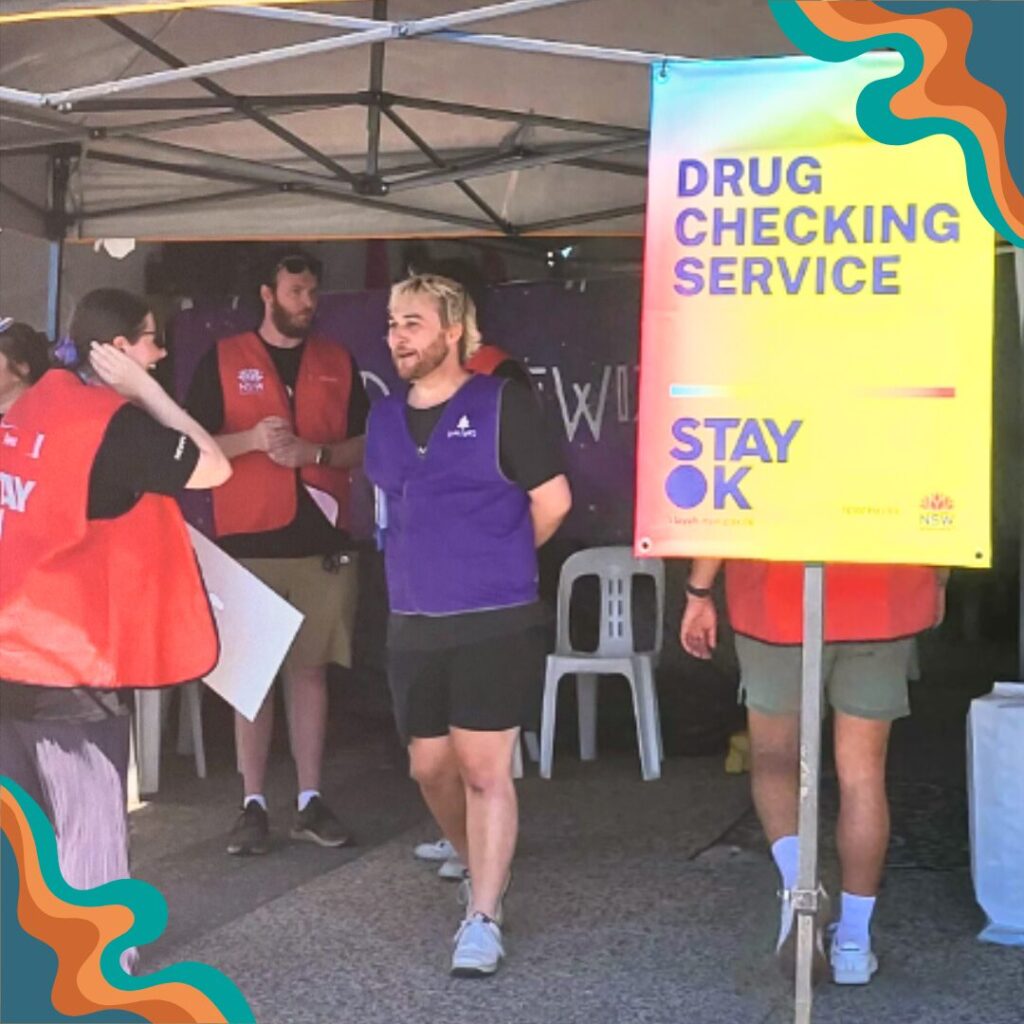
There’s no pill testing service running anywhere in NSW.
Email your MP – tell them to bring it back.
We have made it really easy by creating a pre-written email template. It only takes 30 seconds!
You can’t always see what’s hidden
60 seconds on why checking matters. Watch it, then send it to someone who should see it.

The drug supply doesn’t come with a label
One in six people in NSW over 14 used an illicit drug in the past year. They bought from an unregulated market with no quality controls and no way to know what’s inside.
Dangerous synthetic opioids are turning up in products sold as other drugs, and MDMA is circulating at potencies people don’t expect and can’t detect. And most harm doesn’t happen at music festivals – nearly three quarters of MDMA-related deaths in Australia occurred in private homes.
Without a checking service, people have no way to find out what they’ve actually got.
Nearly 3 in 4 MDMA deaths
in Australia happened at home, not at events
When people could check, they made safer choices
In the NSW trial, 1,846 people walked in with something they’d bought and found out what was actually in it.
One in seven times, it wasn’t what they thought. People who got unexpected results changed what they did – they took less, they ditched it, they warned their mates. For many, it was the first time they’d ever spoken to a health professional about drug use.
That’s what pill testing does. It puts real information in people’s hands before they make a decision – and gives their families one less thing to lie awake worrying about.
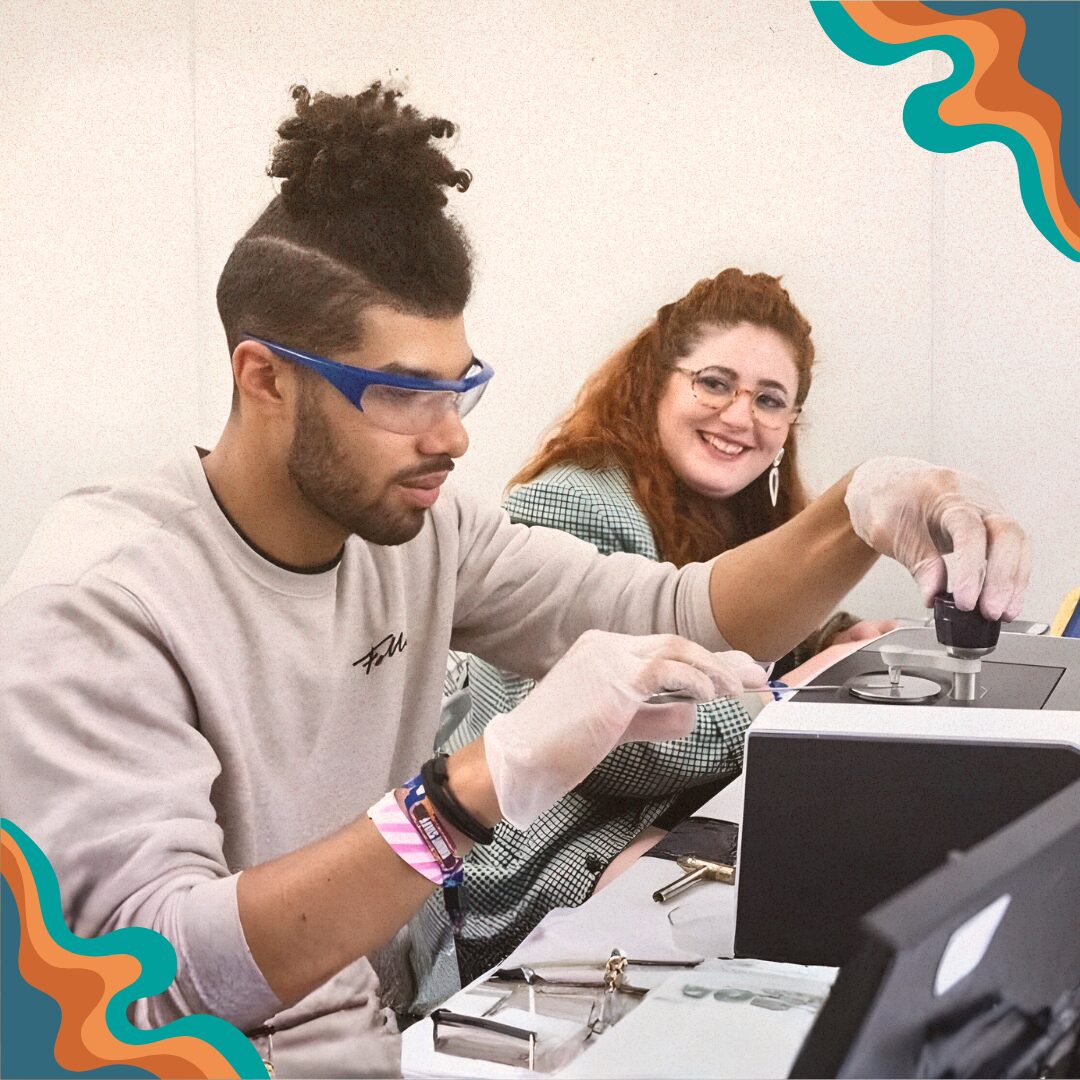
1,846 people
checked what they were taking
1 in 7 samples
weren’t what was expected
Up to 97%
had no prior contact with health services
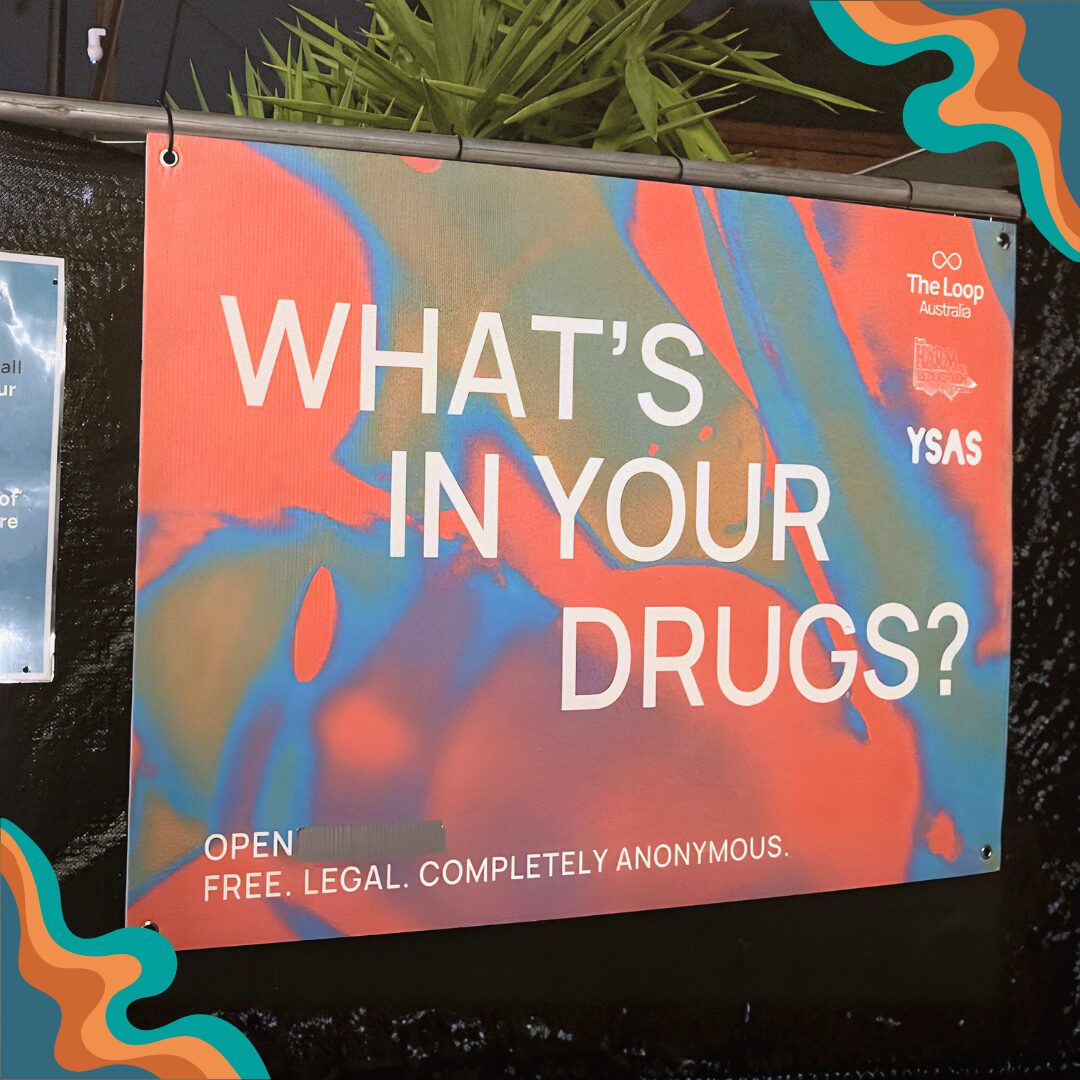
This is already happening. Just not here.
Life-saving pill testing (aka drug checking) operates in at least 26 countries.
In Australia, the ACT has run both festival and permanent community services since 2019.
Victoria launched an 18-month trial covering festivals and fixed sites, and has just announced another 2 years of funding.
NSW trialled it, and let it end without a plan.
People should be able to check
Picture a place in the community, open during the week, where anyone can walk in and find out what’s actually in what they’ve bought.
Imagine a service at every major festival where someone can check what they’ve got before they take it.
That’s what we’re calling for.
Not another trial – permanent services, at festivals and in communities across NSW. The ACT and Victoria already have this. NSW doesn’t need new laws to make it happen. It needs a government willing to act.

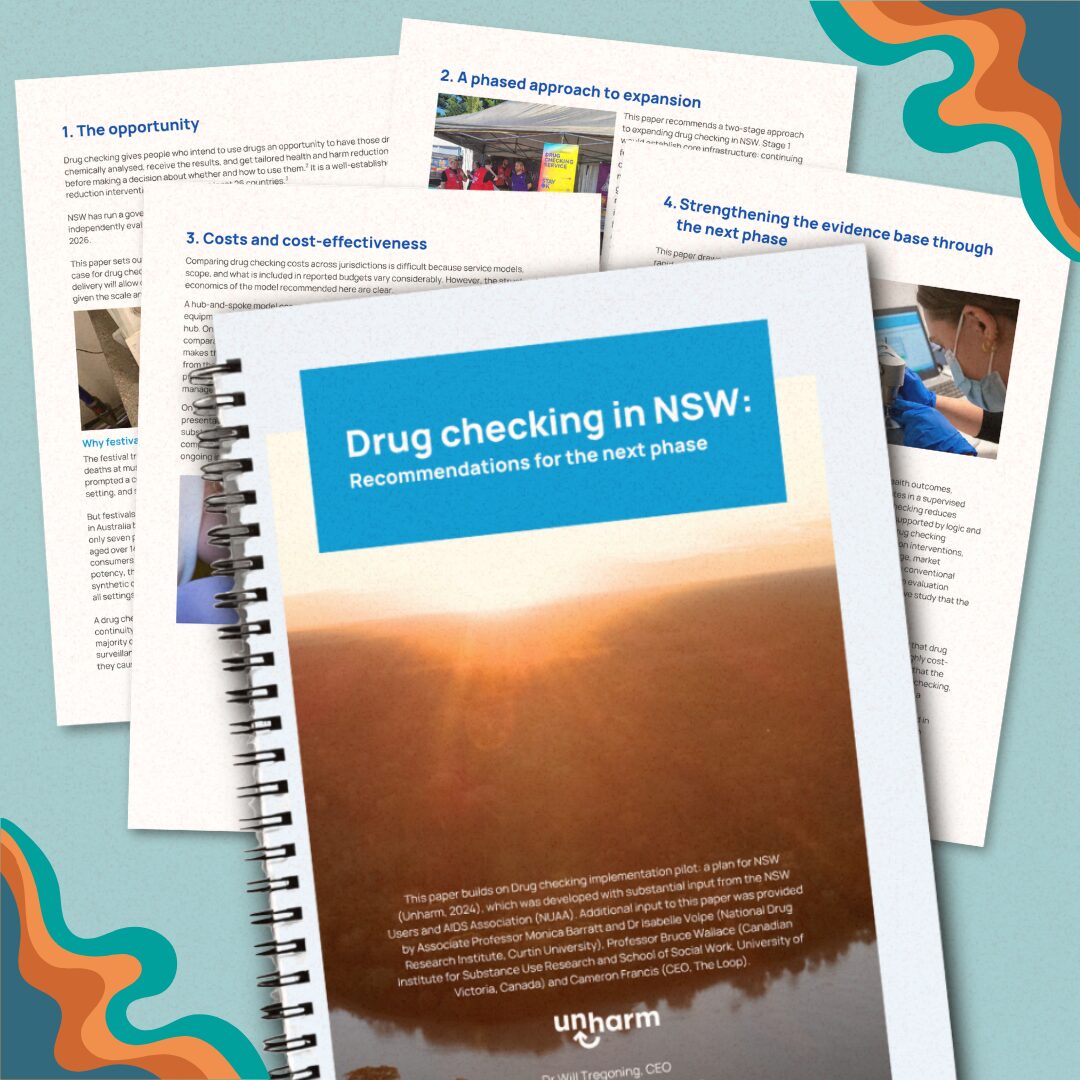
Don’t take our word for it
NSW Health commissioned an independent review of 67 studies on drug checking from around the world.
It found clear evidence that the service changes behaviour, strengthens market surveillance, and reaches people who don’t access any other health service.
Unharm’s policy report sets out what NSW should build next, drawing on input from researchers and practitioners in Australia, Canada and the UK. Read the full case below.
There’s no pill testing anywhere in NSW.
There should be. Tell your MP!
This campaign runs on support from people like you
No corporate sponsors.
No government grants.
Just people who believe everyone deserves to know what they’re taking. Your donation keeps the organising, the research, and the political pressure going.

Frequently Asked Questions
- What is pill testing and how does it work?
Pill testing (also called drug checking) lets people find out what’s actually in what they’ve got before they take it.
You bring a sample to the service, a qualified chemist analyses it using lab-grade equipment, and you get the results along with a conversation with a health professional about what they mean and how to stay safe.
The service is free, confidential, and designed to help people make informed decisions. It operates in at least 26 countries and has been running in parts of Australia since 2019.
- Are pill testing and drug checking the same thing?
Yes. Pill testing is the name most people know. Drug checking is the more accurate term because the service tests all kinds of substances, not just pills – powders, crystals, capsules, whatever someone has. You’ll see both names used. They mean the same thing.
- I'm a parent. How does this help my kids?
It gives them a safety net you can’t provide on your own. No parent can test what their child might take at a festival or a house party.
A pill testing service can.
Across Australian and international evaluations, up to 97 per cent of people who used drug checking services had never spoken to a health professional about their drug use – for many, it was the first honest conversation they’d had about what they were taking.
Pill testing doesn’t replace what you do as a parent. It adds something no parent can do alone.
- Doesn't pill testing encourage drug use?
No. A major review of 67 international studies found no evidence that drug checking increases drug use.
What it changes is how people use.
When results show something unexpected, people take less, ditch what they’ve got, or decide not to use at all. People are already making these decisions. Pill testing gives them real information to make safer ones.
- Is pill testing only for festivals?
No, and it shouldn’t be.
Festivals get the most attention, but nearly three quarters of MDMA-related deaths in Australia happened in private homes, not at events. People use drugs in all kinds of settings, and the risks don’t stop at the festival gate.
That’s why we’re calling for permanent community drug checking services – places people can visit any time to check what they’ve got.
- Drug use is irresponsible - why should I support this?
You don’t have to approve of drug use to support keeping people safe.
Millions of Australians use illicit drugs every year – people across every postcode, every income bracket, every family. Pill testing doesn’t say drug use is a good idea. It says people deserve information that could save their life.
That’s a principle most of us already share.
- How accurate is pill testing?
Testing is conducted by qualified analytical chemists using laboratory-grade equipment that’s been validated across 26 countries over more than 30 years.
In the recommended model, samples that need more detailed analysis go to a central hub with higher-specification instruments for confirmatory testing. The system is designed for reliability and precision at every level.
- How much would this cost?
The exact figure depends on the model, but the recommended approach keeps costs down. Expensive equipment and specialist staff sit at a central hub. Access extends through satellite sites in existing health services, which need only portable equipment and trained staff. Once the hub is running, adding new sites is relatively cheap.
On the other side of the ledger, drug-related emergency presentations, hospitalisations and deaths already cost the health system significantly. This is an investment in prevention.
- What about the police?
Drug checking services work alongside police, not against them.
Police forces across Australia already have established guidelines for working with health services like needle and syringe programs, and similar arrangements have operated during drug checking trials.
People who use the service aren’t arrested. The goal is keeping people safe, and that’s something police and health services share.
- Isn't this the government's job to figure out?
Yes. And where governments have trialled pill testing, it’s worked. The question is whether they’ll act on what they’ve found.
The evidence is there. Public support is overwhelming.
The only thing missing is political will. That’s exactly where your voice makes a difference.